

15 Genius Sports Equipment Storage Ideas to Tame the Garage Clutter
Does your garage feel more like an obstacle course than a place to park your car? If you are tired of tripping over baseball bats, stepping on rogue soccer balls, or digging through a mountain of tangled hockey gear just to find one shin guard, you are not alone. The sports gear explosion is a common rite of passage for active families. However, reclaiming your space is entirely possible with the right approach. For older kids getting into competitive sports, checking out a sports equipment guide for active kids can help you figure out what gear actually needs storage space.
Implementing smart sports equipment storage ideas does more than just make your home look tidy. It saves you precious minutes during the morning rush, prevents expensive gear from getting damaged, and significantly reduces the daily stress of household management. In this guide, we will explore practical, budget-friendly ways to transform your chaos into a highly functional system.
Assessing Your Family’s Sports Storage Needs
Before you run out to buy expensive shelving, take a moment to perform a thorough inventory. Drag every piece of equipment into the middle of the driveway. You will likely find items that have been outgrown, broken, or abandoned. Sort your gear into three piles: keep, donate, and trash. Getting rid of the excess is the most important step in successful garage organization.
Once you have narrowed down your inventory, decide on a categorization system that works for your household. Some families prefer to organize by sport, keeping all basketball items together and all swimming gear in one bin. Others find it more effective to assign a dedicated zone to each family member. If your children are old enough to take responsibility, personal cubbies or bins for each person can significantly decrease the amount of time you spend hunting for misplaced items.
Finally, choose your location wisely. While the garage is the go-to spot for bulky items, smaller, daily-use gear might be better suited for a mudroom or a utility closet inside the home. Evaluate your flow: where do you actually put your bag when you walk through the door? That is where your primary storage hub should be.
Garage Sports Storage Solutions for Large Items
Large sports equipment requires vertical thinking. Wall-mounted overhead racks are a game-changer for seasonal items that you do not need every day, such as snowboards, skis, or even out-of-season surfboards. By utilizing the upper space of your garage, you keep valuable floor space open for vehicles or other projects.
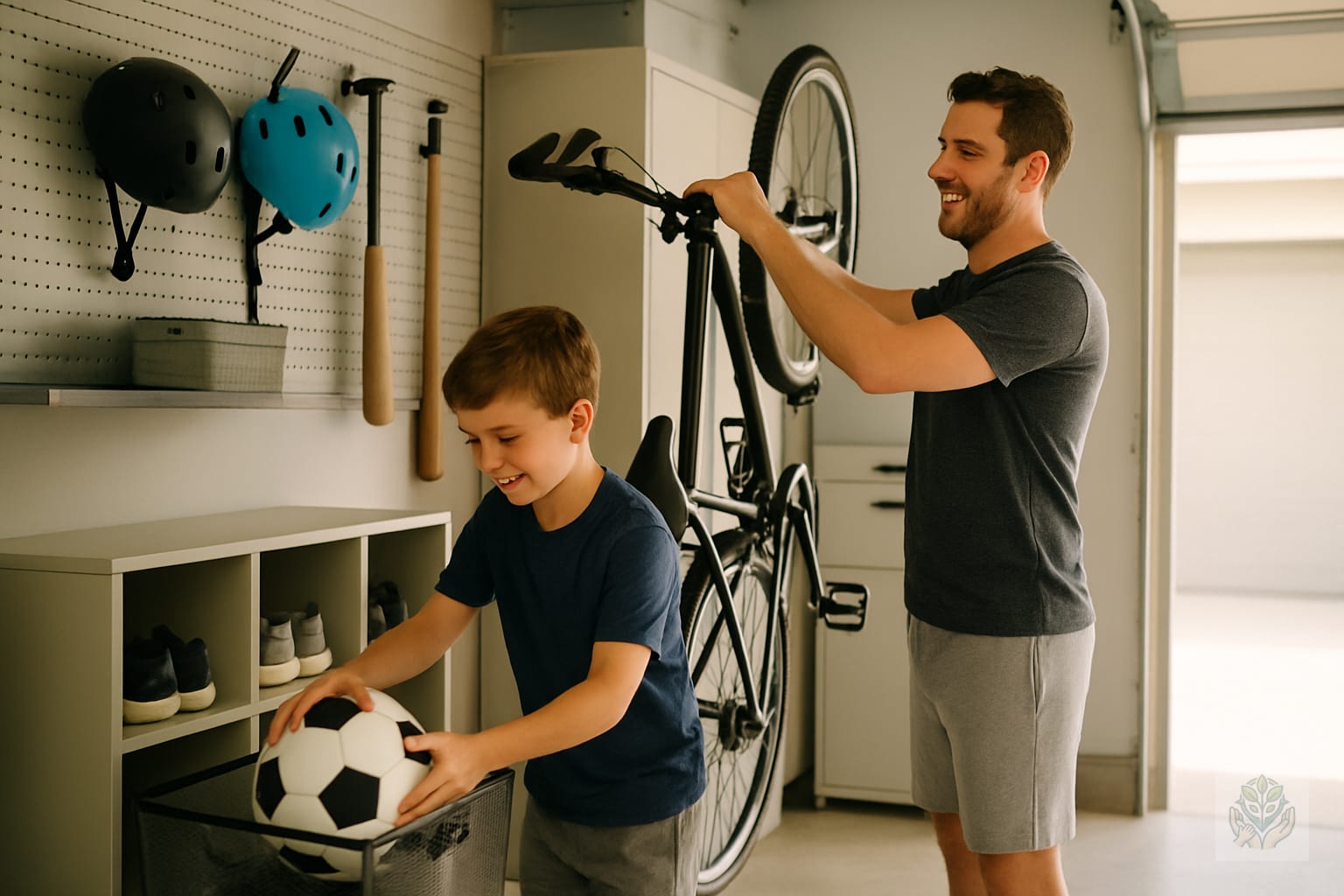
When it comes to balls of various sizes, avoid the pile on the floor. Freestanding ball bins or wall-mounted cages are excellent sports storage hacks. These allow you to store balls securely while ensuring they do not roll under the car or into the street. If you have bicycles or scooters, vertical storage hooks or wall tracks are essential. Mounting bikes vertically allows you to store more in less space while protecting the tires from sitting on a cold, damp concrete floor. For families managing two-wheelers, having a bike repair kit for family cycling stored nearby can keep your maintenance gear just as organized.
DIY Sports Equipment Storage on a Budget
You do not need a professional closet organizer to create an efficient system. A simple pegboard is one of the most versatile tools for any garage. You can mount it on the wall and use various hooks to hang helmets, baseball jerseys, pads, and even jump ropes. This keeps everything visible and accessible, preventing the dreaded gear pileup.
Upcycling is another fantastic way to manage your athletic gear storage. Old wooden bookshelves can be repurposed to hold cleats, batting gloves, and smaller items like water bottles or whistles. If you have plastic laundry baskets or milk crates, label them clearly with specific sports or family members. These bins are lightweight, portable, and easily cleaned if they get muddy. For smaller children’s spaces inside the house, looking into open storage ideas for a kids’ room can offer even more inspiration for accessible bins.
Mudroom & Entryway Organization for Daily Practice Gear
Your mudroom or entryway is the first line of defense against household clutter. Creating a dedicated grab-and-go station can change your entire afternoon routine. Install hooks at heights that even younger children can reach, ensuring that sports bags, cleats, and hats have a permanent home the moment they arrive at the door.
Individual cubbies are highly effective for busy families. By giving each person their own designated slot, you eliminate the “who left this here?” argument. Most importantly, focus on ventilation. Sports gear, especially for hockey or football, can retain moisture and odor. Ensure your storage area has good airflow—open-front lockers or mesh bins are superior to airtight plastic containers for items that need to dry out between practices. If your little ones are also managing outdoor gear like strollers or trikes, setting up a smooth daily routine for kids can help them remember where everything goes.
Tips for Maintaining an Organized Sports Closet
Organization is not a one-time project; it is a habit. Adopt the one-in, one-out rule for your seasonal gear. When you buy a new pair of cleats, ensure the old ones are either donated or tossed. This prevents your storage space from becoming overwhelmed over time.
Labeling is your best friend when trying to maintain order. Use clear, simple labels that even young children can understand. If a child knows exactly where the soccer ball goes, they are much more likely to put it back. Finally, schedule a seasonal maintenance check. Every few months, take 20 minutes to clean out the bins, check for broken gear that needs repair, and ensure that everything is in its proper place before the next season hits. Cultivating these habits early can even support independent habits in kids across other areas of household responsibility.
Conclusion
A well-organized home does more than just look nice; it sets the tone for a more peaceful and productive family life. By using these sports equipment storage ideas, you can spend less time hunting for lost shin guards and more time focusing on the activities that matter most. Remember, you do not have to do everything at once. Start with one shelf or one corner of the garage, and build from there.
Do you have a clever way to keep your sports gear under control? We would love to hear your best storage hacks in the comments section below! If you want more tips on how to simplify your home and streamline your daily routine, sign up for our weekly newsletter for exclusive home organization insights.
Frequently Asked Questions
What is the best way to store large sports equipment in a garage?
Vertical storage is best for large items. Use wall-mounted overhead racks for seasonal gear like snowboards, and vertical bike hooks to keep floors clear.
How can I store multiple balls so they don’t roll away?
Freestanding ball bins, bungee cord ball cages, or wall-mounted sports organizers are excellent ways to keep balls contained and prevent them from rolling across the garage floor.
What are some budget-friendly sports storage ideas?
Pegboards with adjustable hooks, upcycled bookshelves, and labeled plastic milk crates are affordable and versatile options for organizing athletic gear.
How do I keep sports gear from smelling up the house?
Ensure good ventilation by using open-front lockers, mesh bins, or hooks in a mudroom rather than airtight plastic containers, allowing sweaty gear to dry out.
How can I get my kids to put their sports equipment away?
Assign personal cubbies, bins, or low hooks labeled for each family member. Clear labeling makes it easy for children to know where their gear belongs.
How do I maintain an organized sports storage system over time?
Adopt a one-in, one-out rule for seasonal gear and schedule a quick seasonal maintenance check every few months to clear out broken or outgrown equipment.


