

Stress-Free Baby-Led Weaning Meal Planning Tips for Busy Parents
Starting the journey of solid foods is an incredible milestone. The excitement of watching your little one explore new tastes and textures is unmatched, but let us be honest—the daily scramble to figure out what to feed them can quickly lead to burnout. Many parents feel overwhelmed by the sheer amount of preparation involved in introducing finger foods. However, successful baby-led weaning meal planning does not have to mean spending hours in the kitchen preparing separate dishes. Find more inspiration for growing eaters with our nutrient-rich guide to healthy baby growth.
One of the biggest misconceptions about starting solids is that you need to become a short-order cook. In reality, the core philosophy of baby-led weaning is built on family synergy—meaning your baby eats what you eat, with just a few minor adjustments. By implementing strategic baby-led weaning strategies, you can save valuable time, drastically reduce food waste, and lower your daily mealtime stress. Let us dive into ten practical tips designed to make feeding your family a breeze.
1. Modify the Family Meal Instead of Cooking Twice
The golden rule of baby-led weaning is that babies eat what the family eats. You do not need to prepare a completely separate meal for your six-month-old. Instead, cook a healthy family dinner and adapt it to make it safe and appropriate for your baby. This approach introduces your infant to the rich flavors and spices of your regular family diet right from the start.
How do you adapt standard recipes? It is surprisingly simple. For instance, if you are making a hearty chili or a vegetable stir-fry, scoop out a portion for your baby before adding salt or heavy hot spices. Ensure that ingredients are cut into safe, manageable shapes, such as finger-sized sticks or wedges that a baby can easily grasp with a palmar grasp. By modifying your favorite family recipes, you save time and encourage adventurous eating habits early on.
2. Embrace Component Cooking for Easy Assembly
Component cooking is a busy parent secret weapon. Instead of cooking complex recipes every single night, focus on preparing individual, versatile base ingredients that can be mixed and matched throughout the week. This method makes throwing together quick lunches and dinners virtually effortless.
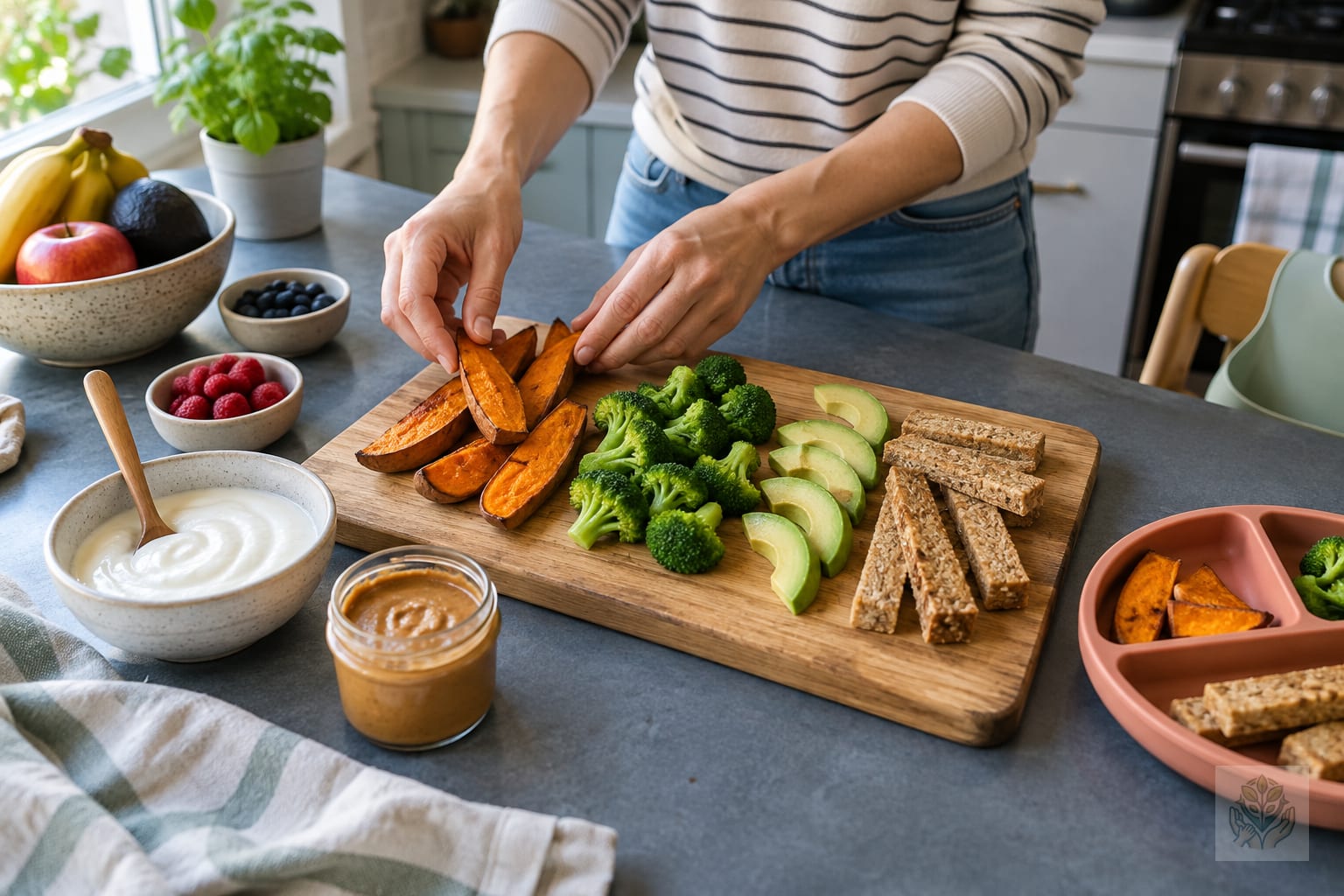
Keep a rotation of simple, roasted or steamed items in your refrigerator. Great examples include roasted sweet potato wedges, steamed broccoli florets, and shredded chicken breast. When mealtime rolls around, you can quickly plate up a balanced combination of these components in minutes. It is a foolproof way to ensure healthy food is always ready when your hungry baby demands it. Get more ideas for tackling daily nutrition challenges with our stress-free guide to planning healthy meals for picky eaters.
3. Leverage Batch Cooking and Freezer Stashes
There will inevitably be days when you are too exhausted to cook from scratch. On those evenings, a well-stocked freezer is a literal lifesaver. Dedicate a small portion of your weekend to batch-cooking baby-led weaning friendly staples that freeze and reheat exceptionally well.
Some of the best freezer-friendly options include nutrient-packed egg muffins, baby-friendly meatloaf slices, and black bean patties. Portion these items out into silicone freezer trays or airtight bags so you can thaw only what you need for a single meal. Having these pre-made options on hand prevents you from reaching for less nutritious convenience foods when time is tight.
4. Build a Balanced BLW Plate Template
When planning your weekly menu, aim for balance rather than perfection. A well-rounded baby-led weaning plate typically consists of three key nutritional components: an iron-rich food, an energy source or carbohydrate, and a fruit or vegetable for vitamins and fiber. For helpful insights on introducing early fruits as finger foods, check out our parent’s guide to starting solids with the best first fruits.
Using a simple weekly matrix can help you visualize variety in textures and nutrients. Make sure you are also introducing potential allergens, such as peanut butter thinned with water, scrambled eggs, or well-cooked seafood, repeatedly throughout your weekly plan. Consistent exposure is key to supporting your baby’s immune system and developing palate.
5. Plan for Mess and Efficiency (Cleanup Hacks)
Part of stress-free meal planning involves preparing for the inevitable mess that comes with self-feeding. When you organize your kitchen with efficiency in mind, post-meal cleanup becomes much less daunting. Stock up on helpful tools like a durable splat mat for under the high chair, catch-all sleeved bibs, and an easy-to-wipe high chair with minimal crevices.
Another fantastic efficiency hack is batch-prep right after grocery shopping. Wash, peel, and chop your produce as soon as you bring it home from the store. When dinner time arrives, you will not have to waste precious minutes washing carrots or trimming green beans; everything will be prepped and ready to cook.
6. Keep a Running List of Quick 10-Minute BLW Backups
Even the best meal plans occasionally fall apart. Maybe your baby took a terrible nap, or you ran late running errands. During these moments of chaos, having a running list of foolproof, ten-minute emergency meals will keep your stress levels low.
Keep these quick ideas posted on your refrigerator:
- Avocado toast strips topped with a sprinkle of hemp seeds.
- Scrambled eggs whisked with a little bit of mashed ripe banana.
- Full-fat Greek yogurt mixed with a spoonful of smooth nut butter.
- Canned low-sodium black beans thoroughly rinsed and lightly smashed.
Sample 3-Day BLW Family Meal Plan
To help you visualize how all these tips come together, here is a practical, three-day family meal plan designed for effortless execution. When your little one transitions from purees to finger foods, you can also explore options like our starter guide to easy vegetable puree recipes for alternative meal preparations.
Day 1: Family Synergy
- Breakfast: Oatmeal cooked with whole milk, topped with mashed berries and cinnamon.
- Lunch: Sliced avocado, soft whole wheat toast strips, and steamed zucchini spears.
- Dinner: Ground turkey tacos (un-salted for baby) served in soft tortillas with mild guacamole and black beans.
Day 2: Utilizing Leftovers
- Breakfast: Scrambled eggs and leftover roasted sweet potato cubes.
- Lunch: Leftover ground turkey and black bean filling rolled into soft flour tortilla pins.
- Dinner: Baked salmon fillets, roasted asparagus spears, and quinoa.
Day 3: Quick Component Assembly
- Breakfast: Full-fat Greek yogurt with chia seeds and ripe banana slices.
- Lunch: Flaked leftover salmon mixed with mashed avocado on rice cakes.
- Dinner: Slow-cooker beef stew with tender carrots, potatoes, and shredded beef chunks.
Conclusion
Embarking on the adventure of feeding your baby should be an enjoyable bonding experience, not an ongoing source of anxiety. Remember that in the world of baby-led weaning, progress always wins over perfection. Every family has messy days, and every baby learns at their own pace.
By focusing on simple modifications, component cooking, and smart preparation, you can create a sustainable routine that nourishes the whole household. Embrace the mess, trust your baby’s innate ability to regulate their intake, and let mindful baby-led weaning meal planning bring the joy back to your family dinner table.
Frequently Asked Questions
Do I need to cook separate meals for my baby during baby-led weaning?
No, you do not need to cook separate meals. The core philosophy of baby-led weaning is family synergy, meaning your baby eats what the family eats with minor adjustments like omitting added salt and hot spices.
What is component cooking for baby-led weaning?
Component cooking involves preparing versatile, individual base ingredients—such as roasted sweet potatoes or steamed broccoli—that can be mixed and matched to quickly assemble quick meals throughout the week.
How can I build a balanced baby-led weaning plate?
A balanced plate typically includes three key components: an iron-rich food, an energy source or carbohydrate, and a fruit or vegetable loaded with vitamins and fiber.
What are some quick emergency meal ideas for busy days?
Quick emergency ideas include avocado toast strips with hemp seeds, scrambled eggs with mashed banana, full-fat Greek yogurt with smooth nut butter, or rinsed and lightly smashed low-sodium canned black beans.
How do I handle the mess during baby-led weaning meals?
Prepare for the mess by using helpful tools like a durable splat mat, catch-all sleeved bibs, and an easy-to-wipe high chair. Batch-prepping your produce right after grocery shopping also saves valuable time.
When should I introduce potential allergens in a baby-led weaning plan?
Potential allergens like peanut butter, eggs, and well-cooked seafood should be introduced repeatedly throughout your weekly plan starting early on, ensuring consistent exposure to support your baby’s immune system.