

The Ultimate Baby Diapering Checklist for Everyday Use: Everything You Need
Introduction
Welcoming a new baby into your home brings an incredible wave of joy, love, and a surprising amount of laundry. It is a central part of newborn care for every family. If there is one constant ritual you will experience multiple times a day, it is changing diapers. Having a reliable baby diapering checklist for everyday use can transform a chaotic chore into a seamless routine. When every second counts during a messy blowout, having your supplies organized and within arm’s reach is an absolute game-changer for new parents.
Why You Need a Solid Diapering Game Plan
Newborns and infants require frequent changes to protect their sensitive skin from irritation and diaper rash. Without a structured plan, you might find yourself frantically searching for wipes while holding a squirming infant with a soiled diaper. Creating a dedicated station with a thorough baby diapering checklist for everyday use ensures you never get caught unprepared. It builds your parental confidence and keeps your baby calm, comfortable, and safe on the changing table.
The Reality of How Many Diapers Babies Actually Go Through
Before your baby arrives, it is easy to underestimate just how many diapers you will actually use. Newborns can easily go through ten to twelve diapers every single day. As they grow into older babies and toddlers, that number drops slightly, but you will still be changing six to eight diapers daily. Multiplying those numbers means you are looking at thousands of changes over the first few years. Preparing ahead of time with the right supplies is essential for surviving the diapering phase with your sanity intact.
The Ultimate Everyday Diaper Changing Station Checklist (At Home)
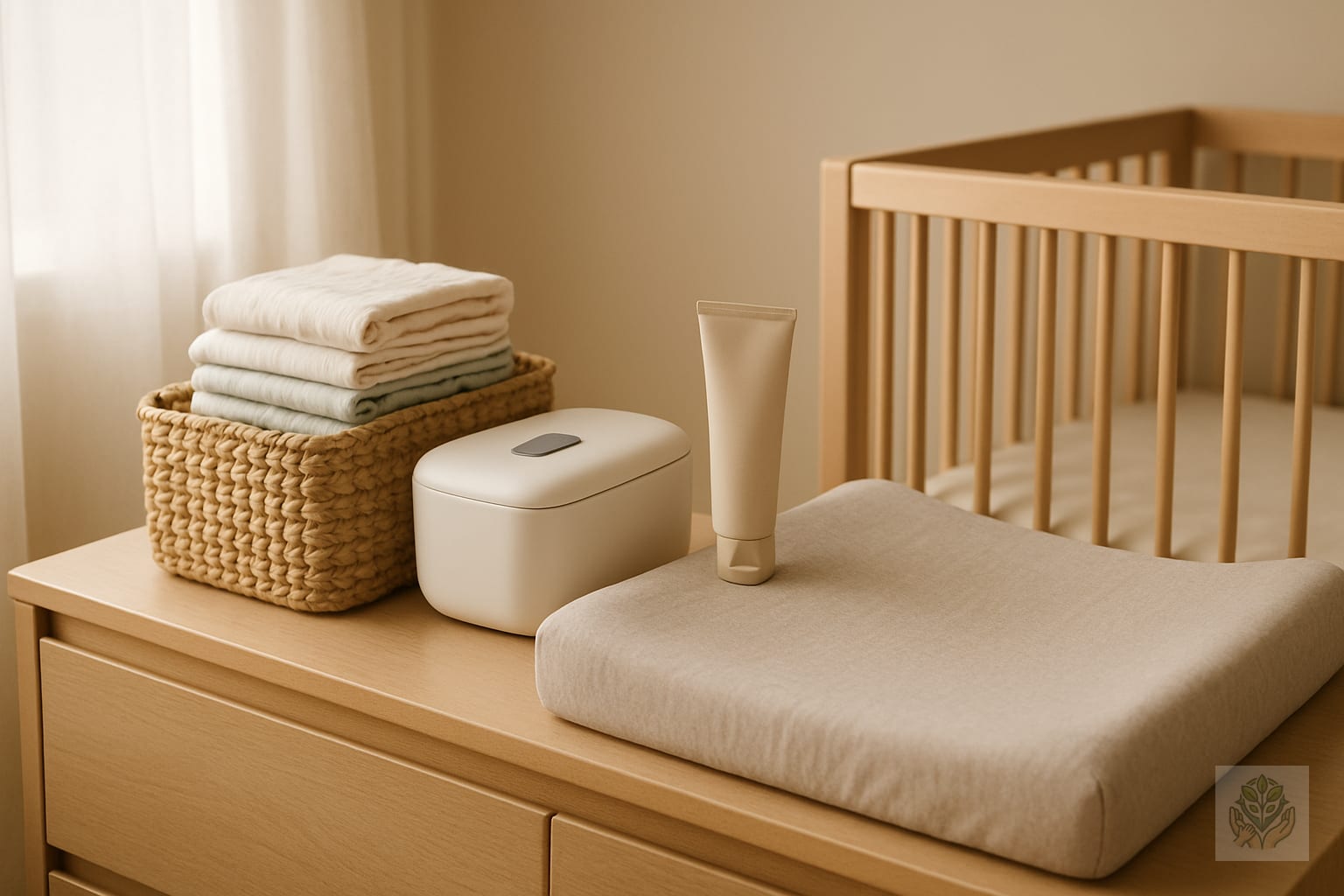
Setting up your main home diaper station requires careful thought to ensure maximum efficiency. This fits perfectly into a structured daily routine for your baby. You want everything organized logically so you can perform changes efficiently, even in the middle of the night. Here is what your home baby diapering checklist for everyday use should include.
Diapers (Disposable vs. Cloth Basics)
Whether you choose disposable diapers or cloth diapers, stock up on a generous supply near your changing table. If you use disposables, keep at least one full unopened pack nearby so you notice when you are running low. For cloth diapering families, keep a stack of clean pre-folds or pocket diapers alongside a wet bag with a waterproof lining for easy laundering.
Wipes and Wipe Dispensers
Gentle baby wipes are non-negotiable for cleaning up messes during every single change. Look for sensitive, fragrance-free options to prevent skin irritation. A weighted wipe dispenser is a wonderful addition because it allows you to pull out a single wipe with one hand instead of dealing with the entire plastic package sliding around.
Diaper Rash Creams and Ointments
Prevention is key when it comes to keeping your baby comfortable. Keep a zinc oxide-based diaper rash cream or a soothing petroleum jelly balm handy for every change. If your pediatrician recommends a specific preventative ointment, keep that front and center along with a soft silicone spatula for mess-free application.
Changing Pad and Waterproof Liners
A contoured changing pad provides a secure and comfortable surface for your baby. To save yourself from constant full cover washes, layer the pad with disposable or washable waterproof liners. When accidents happen, you can simply swap out the liner rather than stripping the entire changing pad cover.
Hand Sanitizer and Surface Cleaners
Hygiene is paramount when managing diaper changes multiple times a day. Keep a pump bottle of hand sanitizer right on your station for quick cleanups if you cannot immediately reach a sink. A gentle surface spray and paper towels are also helpful for wiping down the changing pad after a particularly messy situation.
Portable Diaper Caddy Checklist (For Moving Room-to-Room)
Babies spend time all over the house, and running upstairs to the nursery for every single wet diaper gets exhausting very quickly. This is where a mobile nursery setup becomes your best friend and should include the best baby products every new parent needs.
Why a Mobile Caddy is a Lifesaver
A portable caddy allows you to bring your changing station wherever you happen to be hanging out with your baby. Whether you are in the living room playing on a mat or hanging out in the kitchen preparing dinner, your supplies travel right along with you. It saves your energy and ensures you are always prepared.
Must-Haves for Quick-Access Changes
Keep your portable caddy streamlined so it remains lightweight and easy to carry. Your caddy should feature the following essentials:
- A stack of ten to fifteen diapers in your baby’s current size
- A travel-sized pack of sensitive baby wipes
- A small tube of diaper rash ointment
- One waterproof changing pad liner
- A small sealable trash bag for dirty diapers
- Travel-sized hand sanitizer
On-the-Go Diaper Bag Checklist
Leaving the house with an infant requires a bit of strategy, especially when it comes to managing bathroom breaks away from home. Your diaper bag is essentially your mobile nursery.
Compact Changing Mat
Public changing tables can be cold, hard, and questionably clean. A foldable, wipeable compact changing mat provides a hygienic barrier between your baby and public surfaces. Look for a mat that folds easily and has built-in pockets for a few diapers and wipes.
Travel-Sized Wipes and Diapers
Always pack more diapers than you think you will need for your outing, adding a few extra just in case you experience delays. A travel-sized pack of wipes keeps the overall weight of your bag manageable while still providing plenty of cleaning power.
Disposable Diaper Sacks / Trash Bags
When you are out visiting friends or shopping in public spaces, you will not always find a convenient trash can right next to the changing table. Scented, sealable disposable diaper sacks lock away unpleasant odors until you find a proper place to throw them out.
Change of Clothes (At Least Two!)
Blowouts do not respect your schedule or your location. Always pack at least two complete changes of clothes in your diaper bag. Include a bodysuit, pants, socks, and a spare zip-top bag to store the soiled garments so they do not ruin the rest of your bag contents.
Pacifiers and Distraction Toys
Diaper changes in unfamiliar environments can sometimes cause fussiness. Keep a couple of clean pacifiers in a protective case and a favorite small rattle or crinkle toy in your bag to keep your baby happily distracted while you work your magic.
Pro Tips for Staying Organized and Stocked
Organizing your supplies is only half the battle; maintaining that system is what keeps stress levels low during busy parenting days. Following a complete roadmap to healthy newborn care includes staying ahead of these logistics.
The Rule of Thumb for Restocking
Make it a habit to check and restock your portable caddy and diaper bag every evening before you go to sleep. Finding out you are completely out of wipes while standing in a public restroom is an avoidable stressful experience. A nightly five-minute reset keeps every part of your baby diapering checklist for everyday use fully prepared for the next day.
Managing Diaper Sizes as Baby Grows
Babies grow at astonishing rates during their first year of life. Avoid buying massive quantities of a single diaper size too far in advance, as your baby might outgrow them unexpectedly. Keep only one box of the next size up in reserve, and donate or gift any unopened smaller packs to local family shelters if your baby leaps up a size.
Conclusion
Mastering diaper changes is a rite of passage for every parent, and having the right tools makes all the difference. By utilizing a thoughtful baby diapering checklist for everyday use, you can stay calm, organized, and prepared whether you are at home in the nursery, moving room to room, or traveling out in the world. Enjoy these moments with your little one, knowing you are fully equipped for whatever messes come your way.
Frequently Asked Questions
How many diapers do newborns use daily?
Newborns typically go through about ten to twelve diapers every single day. As they grow older, this number decreases to around six to eight daily changes.
What are the essentials for a home diaper station?
A home diaper station should include diapers, sensitive baby wipes, diaper rash ointment, a contoured changing pad with waterproof liners, and hand sanitizer.
Why do I need a portable diaper caddy?
A portable diaper caddy allows you to bring your changing essentials from room to room, saving you from constantly walking back to the nursery.
How many changes of clothes should I pack in a diaper bag?
You should always pack at least two complete changes of clothes in your diaper bag to handle unexpected blowouts or spills while away from home.
When should I restock my diaper bag and caddy?
Make it a habit to check and restock your portable caddy and diaper bag every evening before you go to sleep to avoid being caught unprepared.
Should I buy large quantities of one diaper size in advance?
Avoid buying massive quantities of a single size too far in advance, as babies grow rapidly and can outgrow diaper sizes unexpectedly.


