

“`html
Vitamin-Rich Baby Recipes Using Fresh Ingredients: A Parent’s Guide
Introducing solid foods to your little one marks an exciting milestone in your parenting journey. Before you begin, you may want to review our guide to starting your baby’s first foods to ensure you are ready for this transition. As your baby transitions from breast milk or formula, every single bite offers an opportunity to build a strong foundation for lifelong health. Preparing homemade meals packed with nutrients ensures your child receives the absolute best nourishment during their crucial first years of growth.
Many parents feel overwhelmed by the thought of making baby food from scratch. However, crafting vitamin-rich baby recipes using fresh ingredients is simpler and much faster than you might think. For more inspiration, explore our comprehensive guide to homemade healthy baby recipes. By harnessing the natural flavors and colors of whole foods, you provide a sensory-rich eating experience that commercial jars simply cannot match.
Introduction
Why Fresh Ingredients Matter for Your Baby’s Development
Your baby’s brain and body develop at an astonishing rate during their first year. During this rapid growth window, every nutrient plays a specialized role in cognitive development, immune function, and bone strength. Fresh fruits, vegetables, grains, and proteins offer a dense matrix of vitamins and minerals that work synergistically in the body.
When you prepare fresh meals, you preserve the natural vitality of the food. Unlike highly processed alternatives, fresh ingredients expose your baby to subtle shifts in flavor and texture. This early exposure helps prevent picky eating later in toddlerhood, encouraging a curious and adventurous palate right from the start.
The Problem with Store-Bought: Fresh vs. Processed Baby Food
Commercial baby food serves a wonderful purpose for convenience and emergency backup. Yet, the high-heat manufacturing processes required for shelf-stable jars often strip away delicate vitamins, particularly vitamin C and certain B vitamins. Manufacturers often add water, thickeners, or starches to achieve a uniform texture, diluting the overall nutrient density.
In contrast, making baby food at home gives you complete control over what goes into your child’s tummy. You select organic produce when possible, avoid added sugars and hidden sodium, and customize textures to match your baby’s exact developmental stage. Knowing exactly how a meal was prepared brings unmatched peace of mind.
Understanding Your Baby’s Nutritional Needs
Key Vitamins and Minerals for Growing Infants (Iron, Vitamin C, Vitamin A, and Healthy Fats)
As infants reach the six-month mark, their natural iron stores begin to deplete, making dietary iron a top priority. Pairing iron-rich foods like lentils, spinach, or soft meats with vitamin C sources enhances mineral absorption. Vitamin A, found abundantly in orange and dark green vegetables, supports healthy vision and immune defense. For a deeper look at essential nutrients, consult our ultimate guide for new parents on baby nutrition.
Healthy fats are another non-negotiable component of infant nutrition. The developing brain requires high amounts of dietary fat for myelin sheath formation and cognitive processing. Incorporating ingredients like avocado, olive oil, and full-fat yogurt supports this incredible neurological leap.
How Fresh Produce Retains Maximum Nutrients
The journey from farm to table directly impacts the vitamin content of your baby’s meal. Produce harvested at peak ripeness contains the highest concentration of antioxidants and micronutrients. The longer fruits and vegetables sit in transit or on store shelves, the more vitamins degrade.
Sourcing local produce or shopping at farmers markets ensures your ingredients are as fresh as possible. Once home, proper storage and gentle cooking techniques help lock in those precious vitamins, ensuring every spoonful delivers maximum nutritional value.
Essential Kitchen Tools for Making Vitamin-Rich Baby Food
Steamers to Lock in Water-Soluble Vitamins
Boiling vegetables leaches valuable water-soluble vitamins, such as vitamin C and various B vitamins, right out of the food and down the drain. A simple steamer basket preserves these nutrients by cooking vegetables quickly using circulating steam rather than submersion.
Blenders, Food Processors, and Baby Food Mills
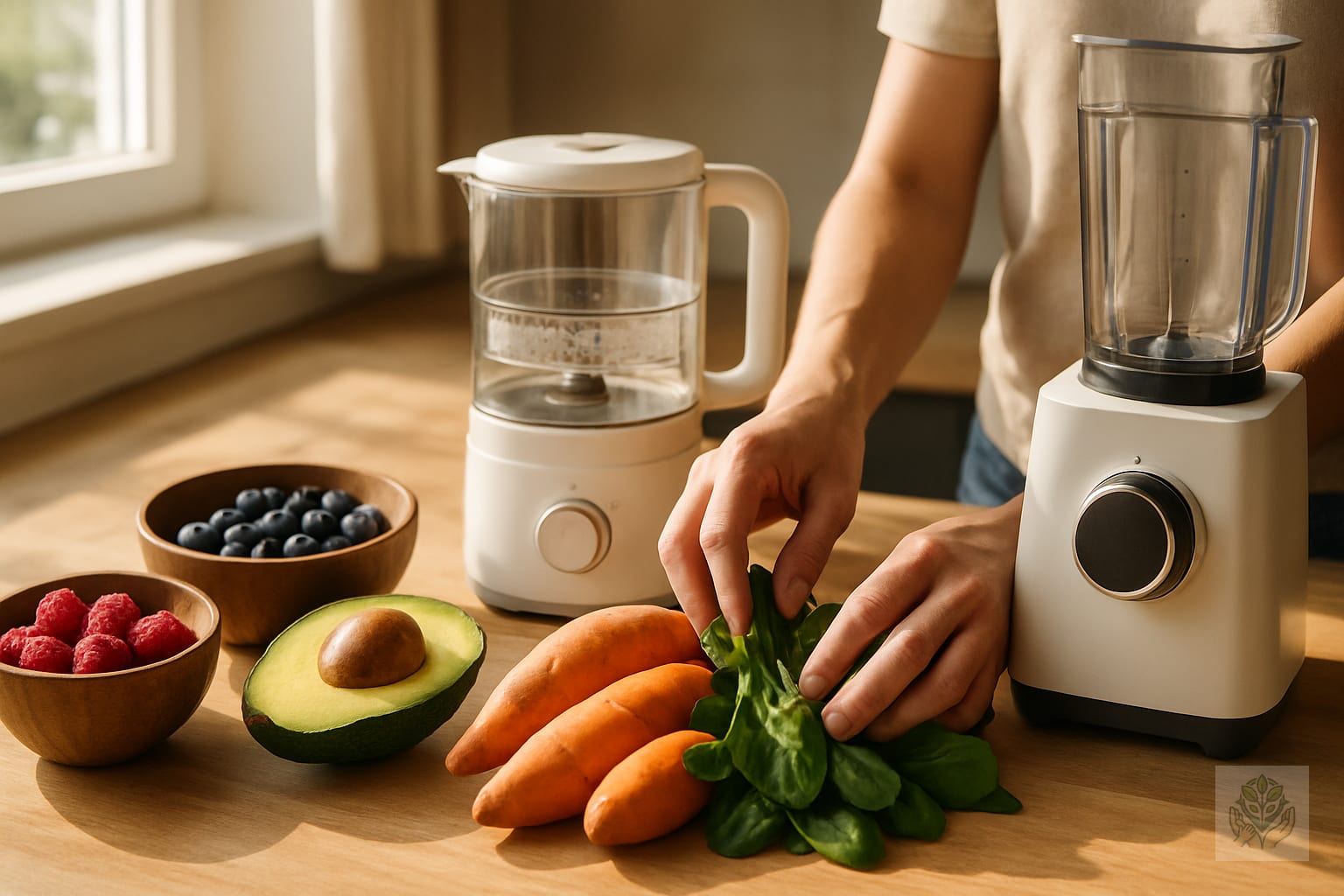
Having the right blending equipment makes meal prep effortless. A high-powered blender or food processor whips up silky-smooth purees for younger infants in seconds. If you are just starting to equip your kitchen, see our advice on choosing baby feeding accessories. A manual baby food mill also works wonderfully for travel or for quickly mashing soft table foods on the go.
Safe Storage Solutions (BPA-free containers and freezer trays)
Batch cooking saves busy parents precious time. Invest in high-quality, BPA-free silicone freezer trays with tight-fitting lids to portion out purees. Once frozen, you can pop the cubes out and store them in labeled freezer bags for up to three months.
Top 5 Vitamin-Rich Fresh Ingredients to Include Daily
Avocados (Healthy fats and Vitamin E)
Avocados are a nutritional powerhouse for infants. They provide heart-healthy monounsaturated fats essential for brain development, along with vitamin E for healthy skin and immune support. Their naturally creamy texture requires no cooking, making prep as simple as slicing and mashing.
Sweet Potatoes (Beta-carotene and Vitamin A)
Vibrant orange sweet potatoes delight babies with their natural sweetness. They are loaded with beta-carotene, which the body converts into vitamin A. This vital nutrient protects eye health and supports cellular growth.
Spinach and Kale (Iron and folate)
Dark leafy greens bring a heavy dose of plant-based iron, folate, and calcium to your baby’s bowl. Steam them lightly and blend them into fruit purees to soften their earthy flavor while boosting nutritional density.
Berries (Antioxidants and Vitamin C)
Berries like blueberries, raspberries, and strawberries are antioxidant champions. They protect cells from damage and provide a generous boost of vitamin C. Mash or puree them thoroughly, or serve soft cooked berries to older babies.
Squash and Carrots (Immune-boosting vitamins)
Winter squashes and carrots offer a comforting, mild flavor profile packed with carotenoids. Roasting these vegetables caramelizes their natural sugars, creating a rich flavor that babies adore while delivering a powerful immune-boosting punch.
Easy & Delicious Vitamin-Rich Baby Recipes (By Age)
Stage 1 (6+ months): Sweet Potato and Apple Vitamin C Mash
This gentle, easily digestible recipe combines the beta-carotene of sweet potato with the vitamin C of fresh apples, fitting perfectly into a month-by-month feeding guide for beginners.
- 1 medium organic sweet potato, peeled and cubed
- 1 crisp apple, peeled, cored, and cubed
- A splash of breast milk, formula, or filtered water for thinning
Place the sweet potato and apple cubes into a steamer basket over boiling water. Steam for 12 to 15 minutes until fork-tender. Transfer to a blender or food processor, add the liquid, and blend until completely smooth. Cool before serving.
Stage 2 (8+ months): Avocado, Spinach, and Pear Puree
A brilliant green combination offering healthy fats, iron, and gentle fiber.
- 1 ripe avocado, pitted and scooped
- 1 ripe pear, peeled, cored, and lightly steamed
- 1 small handful of fresh baby spinach, steamed until wilted
Combine the steamed spinach, cooked pear chunks, and raw avocado in a blender. Puree until smooth and creamy. The natural fats in the avocado help your baby absorb fat-soluble vitamins from the spinach.
Stage 3 (10+ months): Roasted Butternut Squash and Carrot Finger Foods
Encourage self-feeding and fine motor skills with soft, roasted finger food sticks. For more help with meal organization, read about planning healthy baby meals for older infants.
- 1 small butternut squash, peeled and cut into finger-sized batons
- 3 large carrots, peeled and cut into matching batons
- 1 tablespoon olive oil
Toss the vegetable batons in olive oil and spread evenly on a baking sheet. Roast at 400 degrees Fahrenheit for 25 to 30 minutes until tender and slightly caramelized. Let cool completely before serving as graspable finger foods.
Toddler Transition (12+ months): Fresh Berry and Spinach Mini Oatmeal Muffins
A wholesome, hand-held breakfast option packed with hidden greens and fresh fruit.
- 1 cup rolled oats
- 1 ripe banana, mashed
- 1/2 cup fresh mixed berries
- 1 packed cup fresh baby spinach, finely chopped
- 1 egg
- 1/2 cup whole milk
Blend the oats into a fine flour consistency, then mix all ingredients together in a bowl. Spoon the batter into a greased mini muffin tin. Bake at 350 degrees Fahrenheit for 12 to 15 minutes. These freeze wonderfully for busy mornings.
Tips for Preparing and Storing Homemade Baby Food Safely
Washing and Sourcing Organic Produce
Babies have developing immune systems, making proper food hygiene essential. Always wash fresh produce thoroughly under running water, even if you plan to peel it, to remove surface dirt and bacteria. Choosing organic varieties when possible helps minimize your baby’s exposure to synthetic pesticide residues. Keeping your kitchen environment safe is just one part of the ultimate guide to baby safety for new parents.
Best Cooking Methods to Prevent Nutrient Loss (Steaming vs. Boiling)
Prioritize steaming, roasting, or baking over boiling whenever possible. These dry-heat and gentle vapor methods preserve maximum vitamin retention. If you do use cooking water for pureeing, use the vitamin-infused residual water from steaming rather than plain tap water.
Freezing and Reheating Guidelines
Store homemade baby food in airtight containers in the refrigerator for up to 48 hours, or freeze portions immediately for longer storage. Thaw frozen portions overnight in the refrigerator. Reheat until steaming hot, then let it cool down completely before offering it to your baby.
Conclusion
Summary of Benefits
Embracing home-cooked meals using vitamin-rich baby recipes using fresh ingredients empowers you to provide optimal nutrition during your child’s most formative months. From boosting brain development with healthy fats to strengthening immune function with vibrant produce, your kitchen efforts yield profound rewards and contribute to a complete roadmap to healthy newborn care.
Call to Action: Share Your Favorite Recipe or Join Our Parenting Newsletter
What fresh ingredients does your little one enjoy the most? Drop a comment below to share your favorite homemade baby food combination. Don’t forget to subscribe to our parenting newsletter for weekly nutritious recipes, developmental milestones, and expert feeding tips straight to your inbox.
“`
Frequently Asked Questions
When can I start making vitamin-rich baby recipes using fresh ingredients?
Most pediatricians recommend introducing solid foods around six months of age. Starting with single-ingredient purees allows you to monitor for any potential food allergies while providing essential vitamins and minerals.
Why is steaming better than boiling for baby food?
Steaming preserves water-soluble vitamins like vitamin C and B vitamins. Boiling can leach these vital nutrients directly out of the food and down the drain, reducing the overall nutritional value of your baby’s meal.
How do I safely store homemade baby food?
Store fresh baby food in airtight, BPA-free containers in the refrigerator for up to 48 hours. For longer storage, freeze portions in silicone trays for up to three months.
Can I mix fresh fruits and vegetables together?
Yes! Combining sweet vegetables like sweet potatoes with fruits like apples creates appealing flavor profiles while enhancing the absorption of key vitamins and minerals.
Why are healthy fats important in infant recipes?
Healthy fats found in avocados, olive oil, and whole-fat yogurt are critical for your baby’s rapid brain development and help the body absorb fat-soluble vitamins like vitamin A and E.
Do I always need to buy organic produce for my baby?
While organic produce helps minimize pesticide exposure, thoroughly washing conventional fruits and vegetables under running water is also an effective way to prepare safe, healthy meals.


