
When Should Children Wash Their Hands? A Parent’s Guide to Germ Prevention
Introduction
The everyday battle against germs
Every parent knows the daily routine of reminding, pleading, and sometimes physically steering a resistant child toward the bathroom sink. Kids touch everything. From sticky playground equipment and classroom doorknobs to the family dog and the bottom of their own shoes, children collect bacteria and viruses with every adventure. Germs are an invisible part of growing up, but they do not have to result in constant sick days for your household.
Understanding when should children wash their hands is the cornerstone of keeping your family healthy. While you cannot wrap your child in a bubble, you can arm them with one of the most powerful tools in modern medicine: a simple, effective handwashing routine. Establishing these habits early in life protects your children and everyone they interact with.
Why handwashing is your child’s best defense
As a child development specialist, I often remind caregivers that children explore the world through their fingertips. Unfortunately, those same fingers frequently end up rubbing eyes, picking noses, or handling snacks. According to pediatric health experts, proper handwashing acts like a mini-vaccine. It removes pathogens before they can enter the body through the mucous membranes.
When you teach your child proper hand hygiene, you are building self-care skills that foster independence and long-term wellness. Handwashing drastically reduces gastrointestinal illnesses and respiratory infections, meaning fewer missed days of school for them and fewer missed days of work for you. It is a small investment of time with massive physical and developmental returns. Discover more ways to keep your children healthy with our guide on how to support your child’s immune system naturally.
Before and After: The Crucial Times Kids Must Wash Their Hands
Before eating, handling food, or snacking
One of the most critical windows for hygiene is right before anything goes into the mouth. Whether it is a full sit-down dinner or a quick handful of crackers in the car, hands need a thorough scrub first. Even if hands look clean to the naked eye, microscopic germs transfer effortlessly from surfaces straight onto food.
Make it a non-negotiable household rule that washing hands immediately precedes sitting down at the table. If you are away from home and sinks are scarce, guide your children through using hand sanitizer or baby wipes to bridge the gap until you can reach soap and water. You can also explore our tips for healthy breakfast ideas for children’s immune support to start their day right.
After using the bathroom or diaper changes
This is the classic handwashing trigger that most parents emphasize, yet children still manage to rush through or skip it entirely when unsupervised. Human waste carries a high concentration of harmful bacteria and enteric viruses. A quick splash under the faucet simply will not cut it.
For toddlers and preschoolers, stand close by to coach them through using soap and scrubbing thoroughly after every single bathroom trip. Consistency is key here; treating this as an automatic part of the bathroom routine prevents battles over time.
After playing outside, at the park, or touching pets
Outdoor play is essential for physical development, imagination, and mental health. However, playgrounds are notorious hotbeds for germs shared by dozens of other children throughout the day. Sandboxes, slides, and communal toys are prime real estate for bacteria. For more ideas on outdoor play, check out our favorite fun park activities for toddlers and preschoolers.
Similarly, interacting with family pets brings children into contact with animal dander, saliva, and outdoor debris tracked in from the yard. Always guide your child straight to the sink the moment they come inside from outdoor play or after a heavy cuddle session with the dog or cat.
After coughing, sneezing, or blowing their nose
When children catch a cold or allergies flare up, their hands become the primary vehicle for spreading respiratory droplets. Coughing or sneezing into hands transfers viruses directly onto toys, doorknobs, and siblings. If your child comes down with an illness, you can read more about flu symptoms in children for recognition and care tips.
Teach your children to sneeze or cough into their inner elbow instead of their hands whenever possible. However, when they do use tissues or blow their nose, washing hands immediately afterward is vital to stop cold and flu bugs in their tracks.
School and Social Settings: Hidden Germ Hotspots
Coming home from school or daycare
School environments are vibrant hubs of learning and socialization, but they are also shared spaces packed with dozens of children. From shared cubbies to communal crayons, the exposure rate is exceptionally high. When your child walks through the front door after a long day of classes, make handwashing their very first stop.
This simple transition ritual helps wash away the day’s accumulated germs before your child touches the refrigerator handle, snacks on homework fuel, or hugs younger siblings. It also serves as a mental boundary between the school day and home relaxation. For a smoother transition, you can implement stress-free after-school routine ideas for kids.
After sharing classroom supplies and toys
Group learning involves sharing blocks, musical instruments, tablets, and art supplies. While sharing is a wonderful social skill to encourage, it also means germs pass rapidly from hand to hand. Encourage your child to practice good hygiene after collaborative projects, especially during cold and flu season.
While teachers do an incredible job cleaning classrooms, they cannot sanitize every single Lego block after every single touch. Empowering your child to take charge of their own hand hygiene gives them agency over their health.
After participating in sports or group activities
Gym classes, soccer practice, dance studios, and birthday parties expose children to shared equipment, turf, mats, and sweaty environments. High-touch items like basketballs, gym mats, and playground equipment harbor sweat and bacteria.
Pack a small hygiene kit in your child’s sports bag containing kid-friendly soap wipes or a travel-sized hand sanitizer for immediate use when bathroom facilities are not immediately accessible post-practice.
How to Wash: More Than Just a Quick Rinse
The 5 easy steps of proper handwashing (CDC guidelines)
Knowing when should children wash their hands is only half the battle; they also need to know how to do it correctly. The Centers for Disease Control and Prevention outlines five simple steps that every child can master:
- Wet hands with clean, running water (warm or cold) and turn off the tap.
- Lather soap by rubbing hands together, ensuring you reach the backs of hands, between fingers, and under fingernails.
- Scrub for at least 20 seconds.
- Rinse hands well under clean, running water.
- Dry using a clean towel or air dry them.
The Happy Birthday rule: How long should kids scrub?
Twenty seconds feels like an eternity to an impatient child. To help them pace themselves, introduce a fun auditory cue. Singing the Happy Birthday song twice from beginning to end takes roughly 20 seconds, making it the perfect timer.
You can also encourage them to sing the Alphabet song slowly or count to twenty in a silly voice. Turning the scrubbing phase into a musical moment transforms a tedious chore into a playful game.
Soap and water vs. Hand sanitizer: When to use which
Parents often wonder if hand sanitizer is an adequate substitute for traditional washing. While alcohol-based hand sanitizers containing at least 60 percent alcohol are fantastic for quick clean-ups on the go, they are not a cure-all.
Soap and water are always superior because they physically remove dirt, heavy grime, chemicals, and specific stubborn germs like norovirus. Reserve hand sanitizer for times when soap and sinks are completely out of reach.
Creative Ways to Make Handwashing a Habit
Using fun soaps and step stools for toddlers
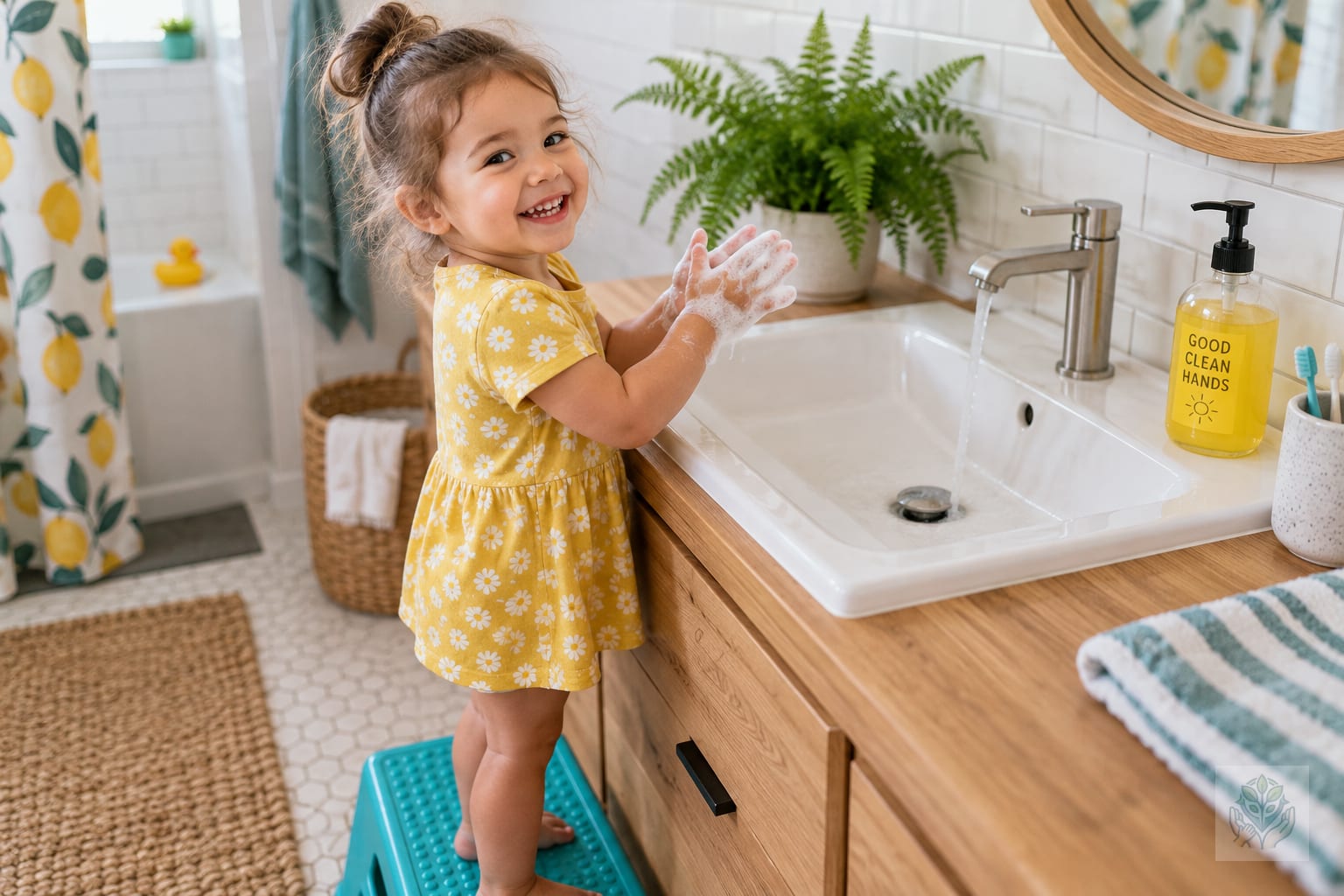
Physical accessibility is a major hurdle for young children. If a sink is too high or the faucet is out of reach, handwashing feels like an impossible physical challenge. Invest in a sturdy, non-slip step stool so your child can reach the water comfortably.
Additionally, let your child pick out their own soap at the grocery store. Foaming hand soaps in bright colors with pleasant fruit scents or favorite cartoon characters make the handwashing experience exciting and tailored to their tastes.
Turning handwashing into a game or song
Children learn best through play. If you approach handwashing with a rigid or frustrated tone, children will naturally resist. Instead, invent playful routines such as pretending their hands are rescue vehicles driving through soapy car washes. You can find more engaging methods in our detailed guide on how to teach children to wash their hands properly.
You can also use waterproof bath crayons to draw a tiny smiley face on the back of your child’s hand in the morning, challenging them to make the smiley face disappear by the end of their thorough handwashing sessions.
Setting a good example as parents
Children are perceptive sponges who mimic adult behavior far more than they listen to verbal instructions. If you skip handwashing after gardening or before cooking dinner, your child will notice and replicate that shortcut.
Make family handwashing a group event whenever possible. Wash your hands alongside your child before meals, narrating your steps so they see that healthy hygiene is a universal value practiced by everyone in the household, not just a rule for kids.
Conclusion
Building lifelong healthy hygiene habits
Teaching your children when and how to wash their hands is an invaluable gift that pays dividends for a lifetime. By transforming hand hygiene from a daily battle into an empowering, fun routine, you set your child up for greater independence and better health.
Remember that consistency, patience, and positive reinforcement are your best allies. Celebrate small milestones and gently guide them when they forget. Over time, these actions transition from external rules into deeply ingrained habits.
Summary checklist for parents
Keep this quick reference guide handy to remember the golden rules of child hygiene:
- Wash before every meal, snack, and food preparation session.
- Wash immediately after using the bathroom or diaper changes.
- Wash after playing outdoors, visiting public parks, and touching pets.
- Wash after coughing, sneezing, blowing noses, or coming home from school.
- Scrub with soap and water for a full 20 seconds using the Happy Birthday song timer.
Frequently Asked Questions
When should children wash their hands?
Children should wash their hands before eating, after using the bathroom, after outdoor play or touching pets, after coughing or sneezing, and immediately upon returning home from school or daycare.
How long should kids scrub their hands?
Kids should scrub their hands with soap and water for at least 20 seconds. Singing the Happy Birthday song twice from beginning to end is a great way to time it.
Is hand sanitizer as good as soap and water for children?
Soap and water are always better because they physically remove dirt, chemicals, and certain germs. Hand sanitizer is a convenient backup when a sink is not available.
Why is handwashing so important for kids?
Handwashing acts like a mini-vaccine, removing harmful bacteria and viruses before they can enter the body through the eyes, nose, or mouth, thereby reducing illnesses.
How can I encourage my toddler to wash their hands?
Use a sturdy step stool so they can reach the sink easily, let them choose fun scented foaming soaps, and turn scrubbing into a game or song.
What should I do if my child resists handwashing?
Approach hygiene with a playful attitude instead of frustration. Use positive reinforcement, make it a shared family routine, and avoid rigid demands to reduce power struggles.