

Toys are much more than just a source of entertainment for children. The right educational toys can help develop cognitive skills, creativity, problem-solving abilities, language development, and social skills while making learning fun and engaging. As children grow, their learning needs change, which is why choosing age-appropriate educational toys is essential. Whether you are a parent looking to support your child’s development or searching for the perfect gift, this age-wise guide will help you find the best educational toys for smart learning.
For babies aged 0–1 year, educational toys should focus on sensory development and motor skills. At this stage, babies learn through touch, sound, sight, and movement. Soft rattles, sensory balls, musical toys, and colorful stacking rings are excellent choices. These toys help improve hand-eye coordination, sensory awareness, and early motor development while keeping babies engaged and curious about their surroundings.
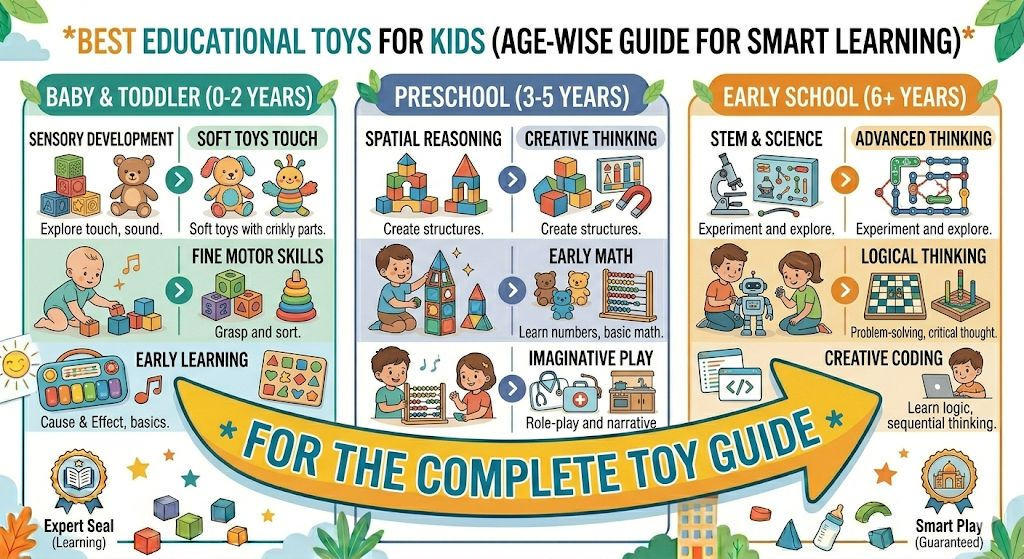
Children aged 1–2 years become more active and eager to explore. Toys that encourage movement, problem-solving, and basic learning are ideal during this phase. Shape sorters, stacking blocks, pull-along toys, and interactive learning books help toddlers recognize shapes, colors, and patterns. These toys also support fine motor skills and encourage independent exploration, which is important for building confidence and curiosity.
For kids aged 2–3 years, educational toys can introduce early language and cognitive skills. Alphabet puzzles, number blocks, picture-matching games, and pretend-play sets are highly beneficial. Children at this age enjoy imitation and imaginative play, making toy kitchens, doctor kits, and animal figurines great options. Such toys encourage creativity, vocabulary development, and social interaction while helping children understand the world around them.
Children between 3 and 4 years are ready for more structured learning experiences. Building blocks, magnetic tiles, simple board games, and art and craft kits can significantly support their development. These toys help improve concentration, problem-solving skills, creativity, and hand-eye coordination. Educational games that involve counting, sorting, and recognizing letters can also provide a strong foundation for preschool learning.
For kids aged 4–5 years, educational toys should challenge their thinking and encourage independent learning. STEM-based toys, beginner science kits, word-building games, and advanced puzzles are excellent choices. At this age, children become more interested in discovering how things work, making construction sets and basic coding toys particularly effective. These toys enhance logical thinking, critical reasoning, and early scientific understanding while keeping learning enjoyable.
Children aged 5–7 years benefit from toys that support academic skills and creativity. Robotics kits, strategy board games, educational tablets, geography puzzles, and math learning games can help strengthen school readiness and problem-solving abilities. Art supplies, musical instruments, and DIY project kits also encourage self-expression and innovation. These activities help children develop confidence in their abilities while fostering a lifelong love for learning.
When selecting educational toys, parents should focus on quality rather than quantity. A toy that encourages active participation and creativity is often more valuable than one that only provides passive entertainment. It is also important to choose toys that match a child’s interests, developmental stage, and safety requirements. Limiting screen-based entertainment and encouraging hands-on learning experiences can further enhance a child’s overall development.
In conclusion, educational toys play a vital role in a child’s growth by combining learning with play. From sensory toys for infants to STEM kits for school-age children, age-appropriate educational toys can help build essential skills while nurturing curiosity and creativity. By choosing the right toys at the right stage, parents can create meaningful learning opportunities that support their child’s intellectual, emotional, and social development. Investing in educational toys is not just about keeping children entertained—it’s about helping them learn, grow, and succeed in a fun and engaging way.