

A well-structured daily routine is essential for a child’s healthy growth and development. It helps children feel secure, develop discipline, and build healthy habits that can benefit them throughout life. From the age of one to six years, children experience rapid physical, emotional, and cognitive development, making it important for parents to create age-appropriate routines that balance sleep, nutrition, learning, play, and family time.
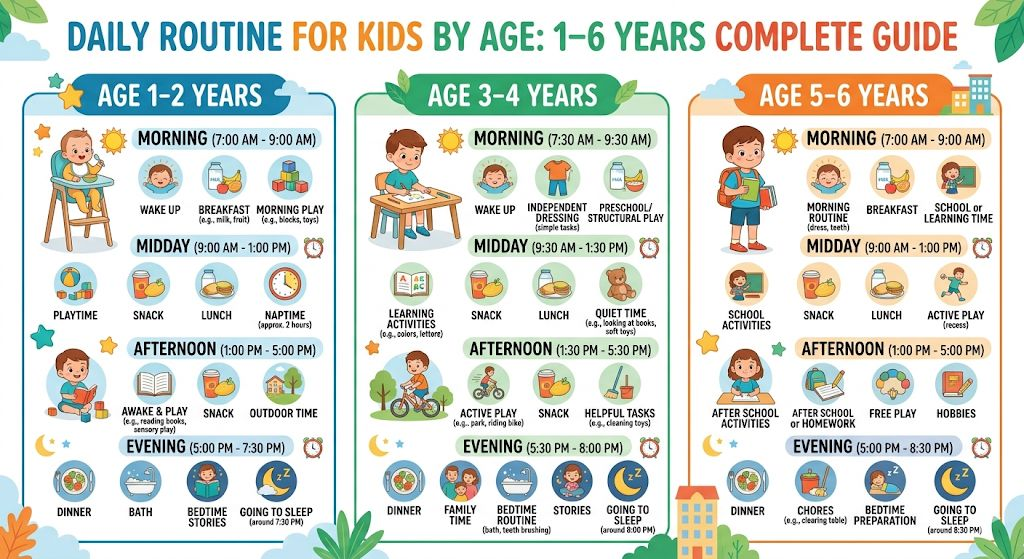
For children aged 1–2 years, the focus should be on adequate sleep, nutritious meals, and sensory-based activities. Toddlers should wake up around the same time each day, enjoy a healthy breakfast, and engage in simple play activities such as stacking blocks, exploring toys, and listening to songs. A midday nap is important for their development, while bedtime should be consistent and calming to ensure quality sleep.
As children reach 2–3 years of age, they become more curious and active. This is the ideal time to introduce basic hygiene habits like brushing teeth and washing hands. Their daily routine should include interactive learning activities such as coloring, storytelling, and simple puzzles. Outdoor play becomes increasingly important, allowing them to develop motor skills while exploring the world around them. Family interaction during the evening can also help improve language and social development.
Between the ages of 3 and 4 years, many children begin preschool, making routine even more important. A regular wake-up time, healthy meals, and a balanced schedule of learning and play can help them adjust to a structured environment. After school, children benefit from quiet time, creative activities, and opportunities to express themselves through drawing, music, or imaginative play. Limiting screen time and maintaining a consistent bedtime remain essential for healthy development.
Children aged 4–5 years become more independent and capable of following instructions. Their routine should encourage self-care skills, such as dressing themselves and organizing their belongings. Educational activities, reading sessions, and problem-solving games can strengthen cognitive development, while physical activities like cycling, running, and playground games support their overall health. Spending quality time with family also helps build confidence and emotional security.
For children aged 5–6 years, routines play a key role in preparing them for formal schooling and greater responsibilities. A balanced day should include school, homework, physical exercise, hobbies, and relaxation. Encouraging children to manage simple tasks independently helps develop responsibility and self-confidence. Activities such as reading, sports, music, or art can nurture their interests and creativity while supporting overall development.
Regardless of age, every child benefits from consistent meal times, sufficient sleep, regular physical activity, and meaningful family interaction. Parents should remember that every child is unique, and routines may need adjustments based on individual needs and preferences. A flexible yet structured schedule can create a positive environment where children feel supported and encouraged to learn and grow.
In conclusion, a well-planned daily routine provides children with the stability and guidance they need during their early years. By balancing learning, play, rest, and healthy habits, parents can support their child’s physical, mental, and emotional development. Establishing a strong routine from an early age lays the foundation for a healthier, happier, and more successful future.